Grant

Study: Retrofit Pathway for Municipal Buildings — GMF

Study: Retrofit Pathway for Municipal Buildings

FUNDED BY GREEN MUNICIPAL FUND

The Green Municipal Fund’s Retrofit Pathway Study grant funds detailed feasibility studies that assess the approaches needed to retrofit existing municipal buildings to achieve deep energy and GHG reductions. It’s designed to help communities plan long-term building upgrades — a practical first step before committing to capital work.

Eligible Projects

  • Studies may focus on a single municipal building or a portfolio of municipal buildings 
  • Buildings such as band offices, community centres, cultural facilities, and emergency centres
  • Studies must identify a pathway to deep energy and GHG emissions reductions over time

Eligibility

An Indigenous community is an eligible lead applicant if they are partnering with a Canadian municipal government on an eligible project, or if they have a shared service agreement with a Canadian municipal government related to municipal infrastructure, climate change or adaptation. 

Amount

  • Grant for up to 50% of eligible costs — up to $65,000 for a single building, up to $200,000 for multiple buildings 
  • First-time Indigenous applicants in eligible northern communities may qualify for a grant of up to 100% of eligible costs 

Deadline

Rolling intake — applications are accepted year-round, though this offer will close when all funding has been allocated. 

Study: Retrofit Pathway for Municipal Buildings — GMF Read More »

Cultural Infrastructure – NDIT

CULTURAL INFRASTRUCTURE

FUNDED BY NORTHERN DEVELOPMENT INITIATIVE TRUST

Funding Overview:

The Cultural Infrastructure program supports creation of, or the improvement of, arts, heritage, culture and creative innovation spaces. This program improves the access to, and quality of, professional arts and cultural facilities for residents and tourists alike.

Eligibility:

Local Governments
Registered First Nations governments
Registered Not-for-Profits
Wholly Owned First Nation Development Corporations
*Applicants must be located within the NDIT service area in Northern or Central B.C.

Funding Terms:

  • Up to $100,000 available to a maximum of 70 % for upgrades or repairs to an existing facility or amenity
  • Up to $300,000 available to a maximum of 50 % for new construction and/or substantial upgrades to existing facilities

Intake Frequency: Intake is tri-annual.

Cultural Infrastructure – NDIT Read More »

Declaration Act Engagement Fund – NRT

DECLARATION ACT ENGAGEMENT FUND

FUNDED BY NEW RELATIONSHIP TRUST

Funding Overview:

This program provides quick and easy multi-year (4-year) non-repayable funding contributions to First Nations to support their capacity to engage with the Province of B.C.

The objectives of the DAEF are:

  • Provide streamlined, four-year funding with reduced application and reporting barriers.

  • Deliver meaningful funding that enables First Nations to fully participate in government-to-government engagement and consultation with the Province of B.C., without drawing on their own-source revenues.

  • Strengthen sustainable capacity within First Nations to provide knowledge and guidance that supports alignment of provincial laws with the UN Declaration.

  • Advance implementation of the Declaration Act.

Eligibility:

B.C. First Nations under the Indian Act, B.C. Modern Treaty Nations, and Self-Governing Nations.

Funding Cap and Disbursements:

  • The total funding cap over 4 years per Nation is $1,040,000.

  • Advance Payment of $260,000 will be disbursed soon after the submission and acceptance of a fully completed application.

  • Future Payments: Year 2 to 4 will be disbursed annually in equal amounts of $260,000 based on the funding milestones as outlined in a funding letter to be executed between NRT and the First Nation.

Intake Frequency: The DAEF will accept new applications until all eligible BC First Nation communities have accessed the fund. Applicants will only have to apply once to the program.

Declaration Act Engagement Fund – NRT Read More »

Community Buildings Retrofit Grant

Community Buildings Retrofit Grant

Funded by the Green Municipal Fund

The Community Buildings Retrofit initiative helps Canadian municipalities, Indigenous communities, and their partners (including non-profits) upgrade existing community and cultural buildings (like arenas, pools, libraries, recreation centres, etc.) to improve energy efficiency, reduce greenhouse gas emissions, lower operating and maintenance costs, and enhance comfort and service for the community. It covers projects at any stage — from early planning / feasibility to full retrofit implementation.


ELIGIBILITY:

Municipal governments, Indigenous communities (First Nations, Inuit, Métis), and non‐profits that own or operate community buildings are eligible to apply.

  • Buildings must provide recreational, cultural, or community services and be widely accessible.
  • Projects can be single‐building or portfolio (multiple buildings) within a municipality or across municipalities.
  • Depending on the stream, prerequisites may apply (e.g. feasibility studies or alignment with the Green Buildings Pathway).

FUNDING AMOUNT/ FUNDING STRUCTURE:

  • Total program funding: $167 million.
  • Capital retrofit projects: up to 80% of eligible costs, with a maximum of $10 million (combined loan + grant, with the grant portion covering up to 25%).
  • Study/feasibility funding: up to $65,000 for a single building and up to $200,000 for multiple buildings.

GWAII INSIGHTS:

The Community Buildings Retrofit Initiative offers First Nations in BC a powerful opportunity to reduce the long-term costs of operating community facilities while improving comfort, safety, and resilience for members. With access to funding of up to $10 million per project, communities can retrofit spaces like cultural centres and recreation facilities to lower energy use and greenhouse gas emissions. These investments not only free up resources for other priorities, but also support sustainability goals.

Community Buildings Retrofit Grant Read More »

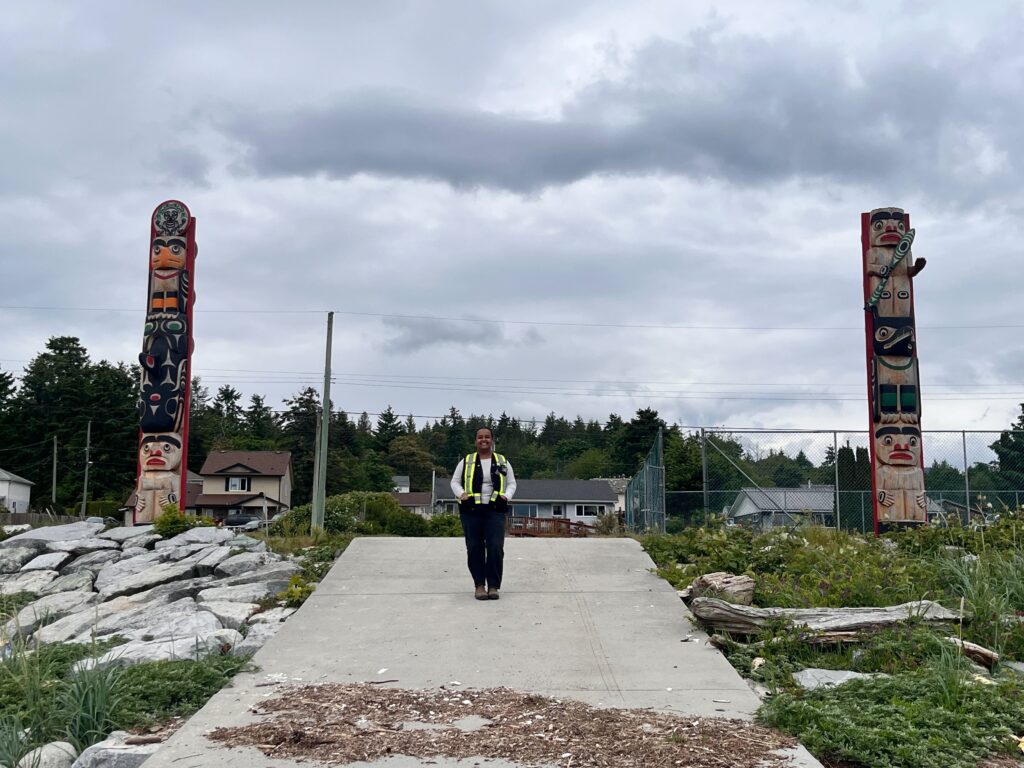
An engineer stands between two totem poles on the beach in Tla'amin Nation.

Community Emergency Preparedness Fund

Community Emergency Preparedness Fund

FUNDED BY THE UNION OF BC MUNICIPALITIES

The Community Emergency Preparedness Fund is a suite of funding streams administered by the Union of BC Municipalities (UBCM) and funded by the Province of BC.

Its purpose is to help First Nations and local governments increase resilience to emergencies and natural hazards, especially under the growing effects of climate change.

The CEPF streams include:

  • Disaster Risk Reduction-Climate Adaptation
  • Emergency Operations Centres Equipment and Training
  • Emergency Support Services Equipment and Training
  • Extreme Temperatures Risk Mapping, Assessment and Planning
  • Flood Risk Assessment, Flood Mapping and Flood Mitigation Planning
  • Indigenous Cultural Safety and Cultural Humility Training
  • Public Notification and Evacuation Route Planning
  • Structural Flood Mitigation
  • Volunteer and Composite
  • Fire Departments Equipment and Training

ELIGIBILITY:
Eligible applicants include First Nations (bands, Treaty First Nations), municipalities, regional districts, and other local governments in BC.

PROJECT CRITERIA:

  • Be a new or further phase of a project (retroactive funding is generally not allowed).
  • Be completable within one year of grant approval, unless otherwise specified.
  • Meet any required permits, authorizations etc.
  • Show alignment with the purpose of the specific funding stream, including any required engagement with Indigenous communities where applicable.

FUNDING:

Most CEPF grants range from about $30,000 to $150,000, depending on the stream.

  • Smaller streams (like Emergency Support Services, EOC equipment, evacuation planning) usually cap around $25K–$40K.
  • Larger streams (like Disaster Risk Reduction or Structural Flood Mitigation) can go up to $150K+.

Deadlines range from October 2025 through April 2026 depending on the stream.

Gwaii Engineering can support your community every step of the way — from assessing project eligibility and scoping, to securing funding, and managing implementation.

If you are interested in securing funding from one or more streams, get in touch with our team below.

Community Emergency Preparedness Fund Read More »

Implementation Projects: Adaptation in Action

Implementation Projects: Adaptation in Action

FUNDED BY THE GREEN MUNICIPAL FUND

The Implementation Projects: Adaptation in Action grant supports on-the-ground climate adaptation projects in Canadian municipalities, Indigenous communities and other municipal partners.

It aims to build long-term resilience by funding infrastructure, services, and nature-based interventions that reduce climate risk and foster equity and inclusion in communities already aware of their climate vulnerabilities.

ELIGIBILITY:

Eligible applicants include Indigenous communities* (or their organizations), as well as Canadian municipal governments and various public-sector partners.

*Indigenous communities must be in partnership/agreement with a municipal government to be eligible for funding.

PROJECT CRITERIA:

  • Must be a new or new-phase climate adaptation initiative (no retroactive funding)
  • Under $1  million in eligible costs
  • Completed within 3 years of grant approval
  • Tied to a community’s existing climate risk assessment or adaptation plan
  • Designed to avoid transferring or increasing hazard risks (e.g. flooding, habitat loss)

FUNDING:

Covers 60% of eligible project costs, up to $1 million maximum grant. Additional stackable incentives (+10% each) may bring funding up to 100%:

  • Indigenous leadership or multi-municipal partnerships
  • Rural/remote communities or populations under 10,000
  • Projects addressing anti‑racism, equity, or Reconciliation
  • Emphasis on nature-positive adaptation

DEADLINE:

There are two funding rounds in 2025:

Round 1: July 8-August 19, 2025
Round 2: August 20-October 9, 2025

Implementation Projects: Adaptation in Action Read More »

beach front with totem poles

First Nation Infrastructure Fund – Government of Canada

First Nation Infrastructure Fund

FUNDED BY THE GOVERNMENT OF CANADA

The FNIF helps First Nations communities upgrade and increase public infrastructure to improve the quality of life and the environment in First Nations communities.

The fund supports a wide range of infrastructure projects, including planning and skills development, solid waste management, roads and bridges, energy systems, connectivity, structural mitigation, fire protection, cultural and recreational facilities and band administrative buildings.

ELIGIBILITY:

Eligible recipients include First Nations governments, Indigenous-owned entities, and public or private sector partners working in collaboration with Indigenous communities.

FUNDING:

$10 million per recipient per year for capital projects involving the retrofitting, construction, replacement, expansion, or purchase and installation of fixed assets or infrastructure.

DEADLINE:

Submission deadline for the First Nation Infrastructure Investment Plan is in the fall of each year. There is no deadline to receive FNIF funding.

First Nation Infrastructure Fund – Government of Canada Read More »

Asset Management Program – Government of Canada

Asset Management Program

FUNDED BY THE GOVERNMENT OF CANADA

The Asset Management Program assists First Nations communities in:

  • Proactively managing infrastructure.

  • Implementing preventative maintenance measures.

  • Enhancing service delivery through effective asset management planning.

The focus for this call for proposals is asset management awareness, planning, implementation and other aspects related to asset management.

ELIGIBILITY:

Open to all eligible recipients under the Capital Facilities and Maintenance Program, including First Nations communities, Tribal councils and related organizations.​

FUNDING:

Depending on the project phase and scope:

  • Phase 1 (Awareness): Up to $30,000 for single communities; up to $120,000 for groups or organizations.

  • Phase 2 (Planning): Up to $70,000 for single communities; up to $210,000 for groups or organizations.

  • Phase 3 (Implementation): Up to $20,000 for single communities; up to $60,000 for groups or organizations.

  • Maintenance Management Planning: Up to $20,000 for single communities; up to $60,000 for groups or organizations.

DEADLINE:

Submit your proposals by October 2. Proposals are evaluated on a rolling basis starting April 1.

Asset Management Program – Government of Canada Read More »

Economic Infrastructure Grant – NDIT

Economic Infrastructure Grant

FUNDED BY NORTHERN DEVELOPMENT INITIATIVE TRUST

The Economic Infrastructure program supports projects of regional and local significance that contribute to economic growth and stronger communities.

These projects include renovations or new construction of public multi-use facilities or capital investments that drive revenue and job creation within the community. Example projects include:

  • Airports

  • Greenhouses

  • Information and communications technology infrastructure

  • Energy diversification

  • Commercial building upgrades

  • Industrial park development

ELIGIBILITY:

  • Local governments

  • Registered not-for-profits

  • Registered First Nation bands

  • Wholly owned First Nation development corporations

All applicants must be located within Northern Development’s service region (pictured above)

FUNDING:

  • Up to $100,000 grant to a maximum of 70% of the eligible project budget; or

  • Up to $300,000 grant to a maximum of 50% of the eligible project budget.

DEADLINE:

Northern Development approves Economic Infrastructure projects on a tri-annual basis. The Spring 2025 deadline is April 30 2025 @ 11:59pm.

GWAII INSIGHTS: 

We’re excited to see this grant promoting self-sufficiency, enhancing economic growth, and supporting culturally relevant infrastructure for Nations in Central and Northern BC.

Given the geographical constraints, submissions are highly encouraged from Nations who are eligible. We recommend looking through the example projects, as well as utilizing the many resources on the NDIT’s website.


Economic Infrastructure Grant – NDIT Read More »

Clean Fuels Fund – Government of Canada

CLEAN FUELS FUND

FUNDED BY THE GOVERNMENT OF CANADA

The goal of the Clean Fuels Fund is to overcome the barrier of the upfront capital investment that industry requires to develop new clean fuel production facilities and increase capacity.

The “Indigenous-Led Projects” stream of the Clean Fuels Fund provides Indigenous-led projects with cost-shared, conditionally repayable funding, with the aim of helping build new clean fuel production facilities or retrofit/expand existing ones in Canada.

Additionally, the fund provides non-repayable funding for feasibility studies, basic engineering studies and detailed front-end engineering studies for new facilities, expansions or conversions of existing facilities.

ELIGIBILITY:

Legal entities validly incorporated or registered in Canada (including not-for-profit and for-profit organizations) that can demonstrate a minimum of 50% Indigenous ownership.

FUNDING:

For capital projects, the Program will provide up to 50% of total project costs up to a maximum of $50M

For studies, the Program will provide up to 75% of total project costs up to a maximum of $5M

DEADLINE:

Intake for this program is ON-GOING. The program has the authority to close the intake at any time, such as when the program has received more completed applications than funds available.

GWAII INSIGHTS:

As this stream of the Clean Fuels Fund is focused solely on Indigenous communities and businesses, we strongly encourage early uptake and planning. Since applications are accepted on an ongoing basis, we recommend starting as soon as possible to maximize your chances of success. They have provided a list of projects that have been funded previously – we recommend Nation representatives review these before starting the application process.

Clean Fuels Fund – Government of Canada Read More »

Scroll to Top